
Nutritional Therapy in St. Petersburg: Root-Cause Nutrition for Every Stage of Life
A whole-body look at what your symptoms are telling you, built into a plan sized to your actual life.
What's Covered on This Page
- What Nutritional Therapy Addresses and Who It Helps
- Nutritional Therapy vs. a Licensed Dietitian in Florida
- Inside a Nutritional Therapy Session at Coastal Chiropractic
- Nutrition Support Across Every Life Stage
- Nutritional Therapy for St. Petersburg's Active Outdoor Lifestyle
- What should I bring to my first visit?
- How soon will I notice changes?
- Is it the same as a Registered Dietitian?
- What symptoms can it help with?
- Does the local climate change what I need?
- Can kids benefit too?
What Nutritional Therapy Addresses and Who It Helps
Nutritional Therapy isn't about handing you a diet sheet and sending you home. It's a real look at what's going on inside your body. A joint that keeps locking up or a headache that won't quit is often tied to something you're eating or not eating enough of. We see this every week. A patient comes in for neck pain, and after a few visits the bigger issue turns out to be blood sugar swings or gut inflammation that's keeping their whole system on edge.
This service tends to help a few kinds of people the most: New moms trying to rebuild energy after pregnancy. Athletes whose joints ache in ways that adjustments alone don't fully resolve. Adults dealing with chronic fatigue, brain fog, or inflammation that's dragged on for months. And plenty of folks who just feel "off" and can't explain why.
Kids benefit too, especially when growth spurts or picky eating leave gaps in what their bodies need.
Our nutritional therapy practitioner, Louisa, brings a passion for functional health — rooted in her own journey overcoming personal health challenges — to her work supporting Dr. Paige and Dr. Heather. She is currently finishing her licensing in Nutritional Therapy, so this isn't guesswork built on trends. Louisa believes true care means treating the whole person: movement, sleep, nutrition, and lifestyle together. She is dedicated to helping every patient feel supported on their path back to feeling their best. She looks at patterns, symptoms, and history before suggesting anything.
The Five Pillars We Build Your Plan Around
Rather than relying on quick fixes or restrictive diets, we create a personalized nutrition and lifestyle plan centered around five key pillars of health. Looking at all five together is how we get to the root cause instead of chasing one symptom at a time.
- Nutrient Density: Fuel your body with the vitamins, minerals, and nutrients it needs to function at its best.
- Digestion: Support proper digestion and gut health to improve nutrient absorption, energy, and overall wellness.
- Sleep: Optimize sleep quality so your body can repair, recover, and regulate essential hormones.
- Stress Management: Reduce the effects of chronic stress through practical strategies that support both physical and mental well-being.
- Blood Sugar Regulation: Create balanced eating habits that stabilize blood sugar, improve energy, reduce cravings, and support long-term health.
Nutritional Therapy vs. a Licensed Dietitian in Florida

Here's the honest answer, since you'll hear this question a lot. Nutritional Therapy and dietitian services aren't the same thing under Florida law. Since 2020, Florida has exempted holistic health and wellness practitioners from dietitian/nutritionist licensure — as long as they don't use protected titles like 'dietitian' or 'nutritionist,' and don't work with clients who are under a doctor's direct care for a diagnosed disease requiring nutrition intervention. According to the Bureau of Labor Statistics1, a registered dietitian that holds a state license is trained to provide medical nutrition therapy for conditions like diabetes or kidney disease. Nutritional Therapy, the way we practice it, looks at your whole lifestyle — your gut health, your sleep, your stress, your movement patterns — and builds food and habit changes around what your body's telling you. If you are not sure whether Nutritional Therapy or dietitian care is the right fit, that is a good question to bring to a wellness consultation with our health team.
The one that you need depends on what's going on. If a doctor handed you a diagnosis and a meal plan tied to a specific disease, that's dietitian territory. If you're dealing with fatigue, bloating, stubborn weight, or you just feel off and can't pin down why, that's usually where Nutritional Therapy does its best work.
We get this mixed up in conversation almost every week.
Louisa works alongside Dr. Paige as part of a bigger-picture plan, not a standalone diet fix. That combination matters in St. Petersburg, where a lot of folks are juggling humid-weather fatigue, beach town schedules that mess with sleep, and the same processed convenience foods everyone else eats when life gets busy. Nutritional Therapy fits into that context. It doesn't replace medical nutrition therapy, and we'll say so if that's what you need.
Not sure which side of that line you're on? That's a fair question to bring to a wellness consultation with our health team before you commit to anything. We'd rather point you in the right direction than pretend one service covers everything.
Not sure what your body needs? Ask us.
Call now for a free phone consultation. Coastal Chiropractic is ready to help.
Inside a Nutritional Therapy Session at Coastal Chiropractic

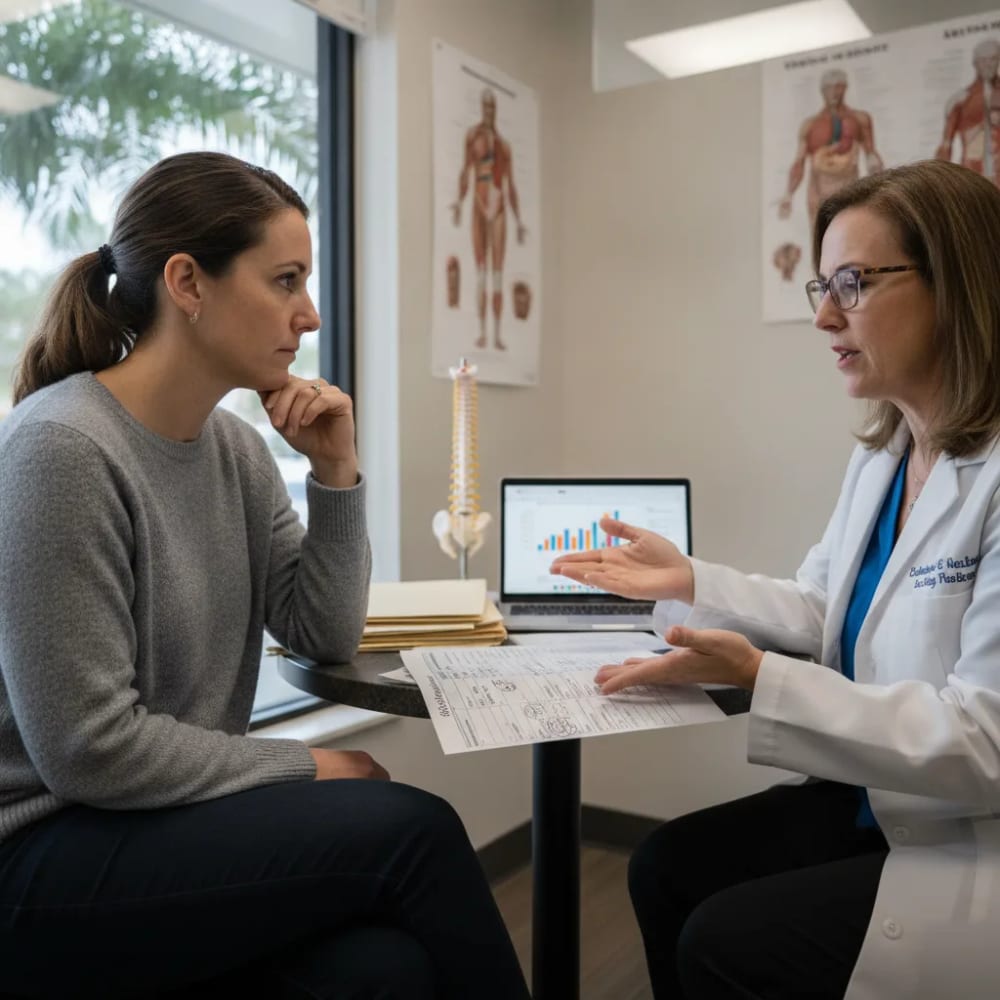
So, what happens when you sit down for Nutritional Therapy here? It's not a lecture, and it's not a handout with a generic food list. Louisa starts every session by listening first.
Most first visits run through a few steps, in this order:
- A talk about your current symptoms, energy patterns, and daily eating habits — no judgment involved.
- A review of your health history and how it connects to your chiropractic care plan.
- A look at sleep, stress, and activity, since those three shape digestion more than people expect.
- A simple set of next steps you can follow, not a binder you'll never open.
We hear this constantly: someone's been adjusted for weeks, their back feels better, but they're still dragging by 2 p.m. That's usually a food or sleep issue, not a spine issue, and it's exactly what this session is built to catch.
You won't need to bring anything fancy. A rough idea of what you ate yesterday helps more than a fitness tracker printout.
Some people come in with a specific goal — more energy, fewer headaches, steadier moods — and some just know something's off but can't name it. Both are fine starting points. Sessions are conversational, not clinical in tone. You'll leave with a plan sized to your actual life, not an ideal one. For a parent juggling three kids and a job, that plan looks different than it does for a retired athlete managing joint pain. Follow-up visits check what's working, adjust what isn't, and build from there; one small change at a time instead of an overwhelming overhaul on day one.
Not sure what your body needs? Ask us.
Want a closer look at what a session involves? We invite you to get a behind-the-scenes look on our Instagram.
Ready to feel supported through the whole process?
Call now for a free phone consultation. Coastal Chiropractic is ready to help.
Nutrition Support Across Every Life Stage
Nutritional Therapy doesn't look the same for everyone who walks through our door. A pregnant mom needs different support than a teenage athlete recovering from a hamstring strain. A toddler working through colic needs something else entirely. That's the whole point — food and nutrients aren't a one-size answer. They're another tool we use alongside your adjustment plan to help your body heal instead of just feeling less sore for a week.
Louisa works alongside Dr. Paige on the Lifestyle & Nutrition Counseling side of care. For prenatal patients, that might mean looking at what's supporting joint stability as ligaments loosen. For new moms in postpartum care, it's often about recovery and energy, not just weight loss. For kids coming in for well-child visits, nutrition talks stay simple, practical, food-first.
Here's something we see a lot in St. Petersburg specifically. Between the humidity and how much time our patients spend outside on the water or the courts, dehydration and mineral imbalance show up constantly. A lot of folks chalk it up to just 'getting older.' It's often not.
Athletes going through Sports Injury Rehabilitation get nutrition guidance tied directly to their recovery timeline, not generic diet advice pulled from a magazine.
When someone mentions they're always tired or their muscles cramp at night, nutrition is at least part of the conversation more often than not. So we ask about it during your Wellness Consultation — we don't wait for you to bring it up.
Nutritional Therapy for St. Petersburg's Active Outdoor Lifestyle

Folks move here for the weather, then they're out running the waterfront path along North Shore or biking the Pinellas Trail before the afternoon storms roll in. That's great for your heart. It's rough on your body if your fuel and hydration habits haven't caught up with your activity level. We see this constantly with weekend athletes and everyday walkers alike, people who train hard but eat like they're still sitting at a desk all day.
Heat and humidity here aren't a small detail. They change what your body needs. Sweat losses climb fast during a July afternoon jog, and most people replace water but skip the electrolytes and minerals that keep muscles firing and joints moving well. Cramping, mid-workout fatigue, and that foggy feeling after hours in the sun can be associated with low sodium and magnesium levels — common after heavy sweating in heat and humidity.
So what does Nutritional Therapy look like for someone living this lifestyle? Louisa looks at food timing, hydration patterns, and nutrient gaps that show up specifically in active, sun-exposed bodies. Not a generic diet plan. A look at what your training schedule, your sweat rate, and your recovery windows demand.
Think about the tennis player who cramps every match at 3 p.m., or the trail runner whose knees ache more in summer than winter — inflammation and recovery are tied directly to what's going into the body, not just what's happening at the joint. This ties directly into the whole-body approach behind Lifestyle & Nutrition Counseling here, because a body that's under-fueled may not respond as well to adjustments or movement work. Fix the fuel, and the rest of your care plan works harder for you.
Frequently Asked Questions
Common questions about Nutritional Therapy
What should I bring to my first Nutritional Therapy visit in St. Petersburg?
You don't need to bring anything fancy. A rough idea of what you ate yesterday helps more than a fitness tracker printout or food log. Louisa starts by listening to your symptoms, energy patterns, and daily habits before looking at your health history. If you have a specific goal, like more energy or fewer headaches, mention it. If you just feel off and can't explain why, that's a fine starting point too.
How soon will I notice changes after starting Nutritional Therapy?
Most people start noticing small shifts within a few weeks, though it depends on what's going on in your body. Your first visit ends with a simple set of next steps sized to your actual life, not an overwhelming overhaul. Follow-up visits check what's working and adjust what isn't. It's one small change at a time, which tends to stick better than trying to fix everything on day one.
Is Nutritional Therapy the same as seeing a Registered Dietitian in Florida?
No, they're different under Florida law. A Registered Dietitian is licensed through the state and is trained to provide medical nutrition therapy for diagnosed conditions like diabetes, usually as part of a medical treatment plan. Nutritional Therapy looks at your whole lifestyle — gut health, sleep, stress — and builds habit changes around that, without diagnosing or treating a specific disease. If a doctor has given you a meal plan tied to a diagnosis, that's dietitian territory. If you're dealing with fatigue or bloating you can't explain and aren't currently being treated by a doctor for a related diagnosis, this is usually the better fit.
What symptoms can Nutritional Therapy help with?
Nutritional Therapy is often used alongside chiropractic care to support patients dealing with fatigue, brain fog, or joints that ache in ways adjustments alone don't fully resolve. In practice, we've seen patients come in for neck or back pain and later identify blood sugar swings or gut-related issues as contributing factors. New moms rebuilding energy after pregnancy and athletes managing joint pain are among those who tend to benefit most from this approach.
Does St. Petersburg's climate change what my body needs nutritionally?
Yes, it often does. Between the humidity most of the year and how many patients here are out on the water or courts, dehydration and mineral imbalance show up constantly. A lot of folks assume their fatigue or muscle cramping is just getting older, when it's really tied to what their body is losing in the heat. This is one of the first things we check for active patients in St. Petersburg.
Can kids benefit from Nutritional Therapy too?
Yes, kids often benefit, especially during growth spurts or picky eating phases that leave gaps in what their bodies need. Nutrition talk for kids stays simple and food-first, without lectures or complicated meal plans. For well-child visits, this might mean small, practical suggestions parents can use. It works alongside chiropractic care as one more tool to support how a child's body grows and heals.
Ready to Get Started?
Call (727) 370-2056 now for a free phone consultation. Find us at 4610 Central Ave Ste B, St. Petersburg, FL 33711.